
In Addition to Telling Jesse Waters to fuck off- rape and US militarism
Last week on Fox News, Jesse Watters, one of the network's biggest hosts, co-host of The Five and host of his own primetime show, said, and I quote, "Women on base, you better be careful. Ports of call, women in Asia, you better be careful, because these guys are going to be wild animals, and you better watch out."
Giggling about energizing the rape machine that has always gone hand-in-hand with militarism and the US military. It's not surprising, but allow me to be enraged. So fuck that guy.

In the 1950s, after the Korean War, the Korean government built what was known as Kijichon, or camp towns, around US military bases to service US military soldiers with prostitutes from Korea.
And though the Korean government has spoken up about the violence of Japan taking Korean women and using them as sex slaves, also known as comfort women, it has not been held accountable for how it exploited women of its own country.
Let's put numbers next to both. Historians estimate Japan took somewhere between 170,000 and 200,000 Korean women and girls as comfort women during World War Two. Korea has spent decades demanding Japan answer for that number. Meanwhile, Korea ran its own system for its own ally: the kijichon (기지촌). A 2019 lawsuit laid it out: for more than six decades, the Korean and US governments co-managed the trafficking of tens of thousands of Korean women and girls. In Gyeonggi province alone, home to most of the US bases, about 10,000 women were registered as sex workers every single year, from 1953 through the late 1980s. Same government. No outrage.
The overwhelming majority of women in these camp towns were orphans or abandoned children who had experienced poverty and all kinds of abuse already. They were taken by the Korean government, taught English so they could better “service” American soldiers. If they tested positive for an STI, they were detained, sometimes for weeks, against their will, given such aggressive amounts of antibiotics that some women died because of it.
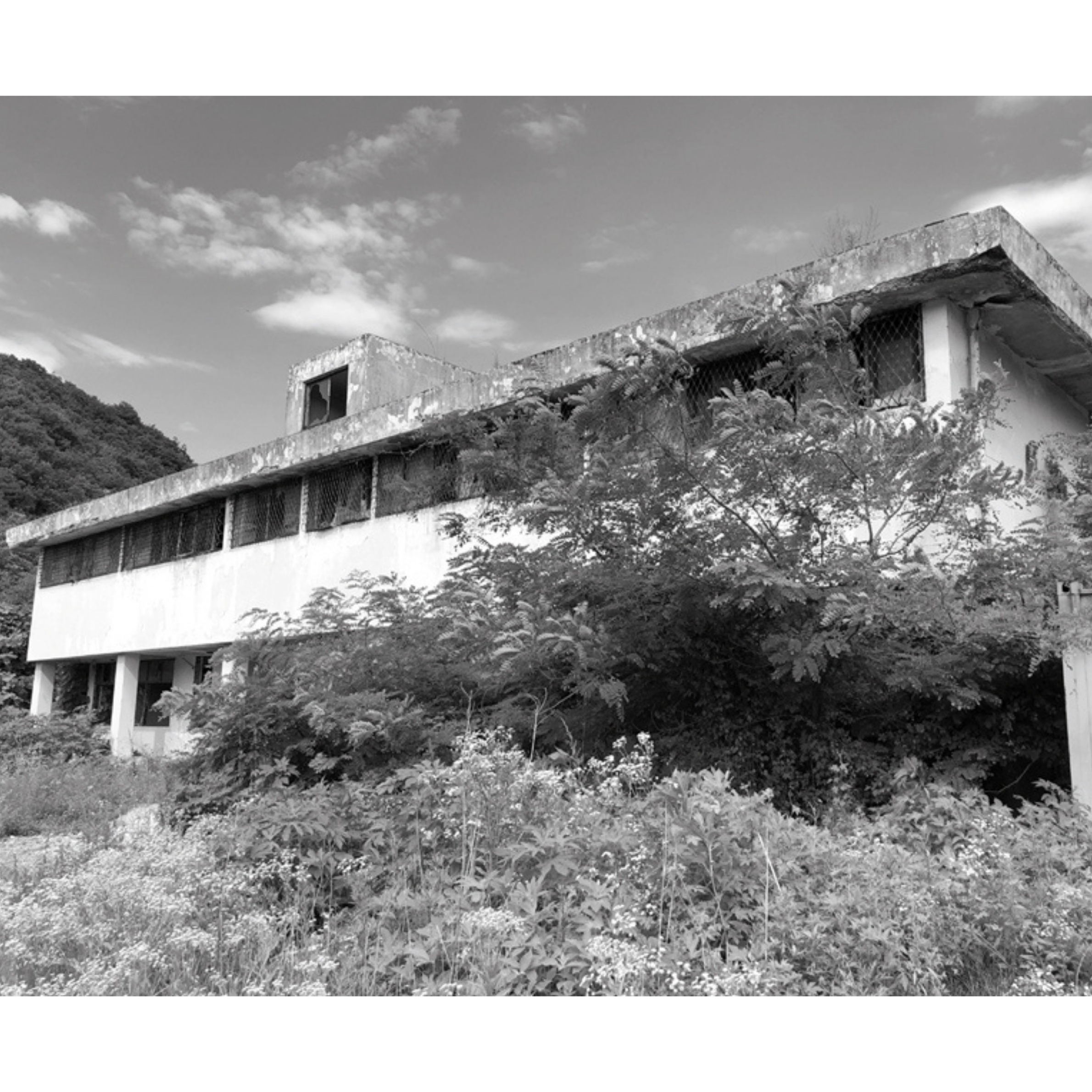
The Monkey House in Dongducheon, South Korea
There's a detention center in Dongducheon that still stands. Women would scream as they were given the injections. People said it sounded like animals in a zoo. And so locals called it the Monkey House.
Data says that between 1967 and 1998, US soldiers committed over 40,000 crimes against women in these camp towns.
Let’s look at just one case. Her name was Yun Geum-i. She was 26 years old, working in a bar in a camp town called Dongducheon. On October 28, 1992, US Army Private Kenneth Markle raped her, beat her, and killed her, before he fled. It was one of the first times a US serviceman was actually handed over to Korean courts for a crime against a Korean sex worker. He was sentenced to life. On appeal, that got knocked down to 15 years. He served 13 and a half, was paroled, and got deported back to the US. Yun Geum-i's murder sparked national protests and a push to renegotiate SOFA, the agreement that shields US troops from local prosecution.
This isn't just a Korea story. It's the pattern everywhere the US military sets up shop.
Okinawa is a small Japanese island that hosts about 70% of all US military bases in Japan, on less than 1% of Japan's land. Okinawan researcher Harumi Miyagi has spent years counting disclosed cases of sexual assault by US servicemen. Her tally: nearly 1,000 cases between 1945 and 2021. And that's only the cases that got reported. In 1995, three US servicemen abducted and raped a 12-year-old Okinawan girl. It sparked mass protests and a promise to close a base. That promise took decades to keep, and the assaults never stopped. Last year, two more Marines were accused of rape on Okinawa.
Then there's the Philippines. In 1947, the Philippine government granted the US twenty-two military bases, including Subic Bay Naval Base and Clark Air Base, the two largest American bases in the Far East. The towns that grew up around them, Olongapo City next to Subic and Angeles City next to Clark, became sex economies built specifically to service American servicemen. When the US finally pulled out in 1991 and 1992, the industry didn't disappear. It just found new customers: sex tourists. The bases also left behind an estimated 50,000 Amerasian children when they closed, fathered by American soldiers and abandoned. In 1992, the Philippine president himself called them "throwaway children." Not one of them has ever been recognized as American.
Kijichon (기지촌). Okinawa. Subic Bay and Clark. Different countries, different decades, same blueprint. Wherever the US military goes, it builds an economy of rape and sexual exploitation. And it keeps running long after the war that supposedly justified it is over. This is what empire does. It occupies land. It occupies women bodies.
So beyond telling Jesse Watters to fuck off, let's use the opening that he's given us. Let's talk about the marriage between US militarism and rape, and the theology that has justified it, normalized it, and animated it.